
Fetal Circulation Explained: How a Baby Gets Oxygen Before the First Breath
Before birth, a baby does not breathe air. The placenta acts as lungs, kidneys and digestive system, while a handful of temporary vessels and openings steer the richest blood toward the brain and heart. This guide explains each structure, the route blood follows, and the remarkable changes that switch the whole system over within minutes of the first cry.
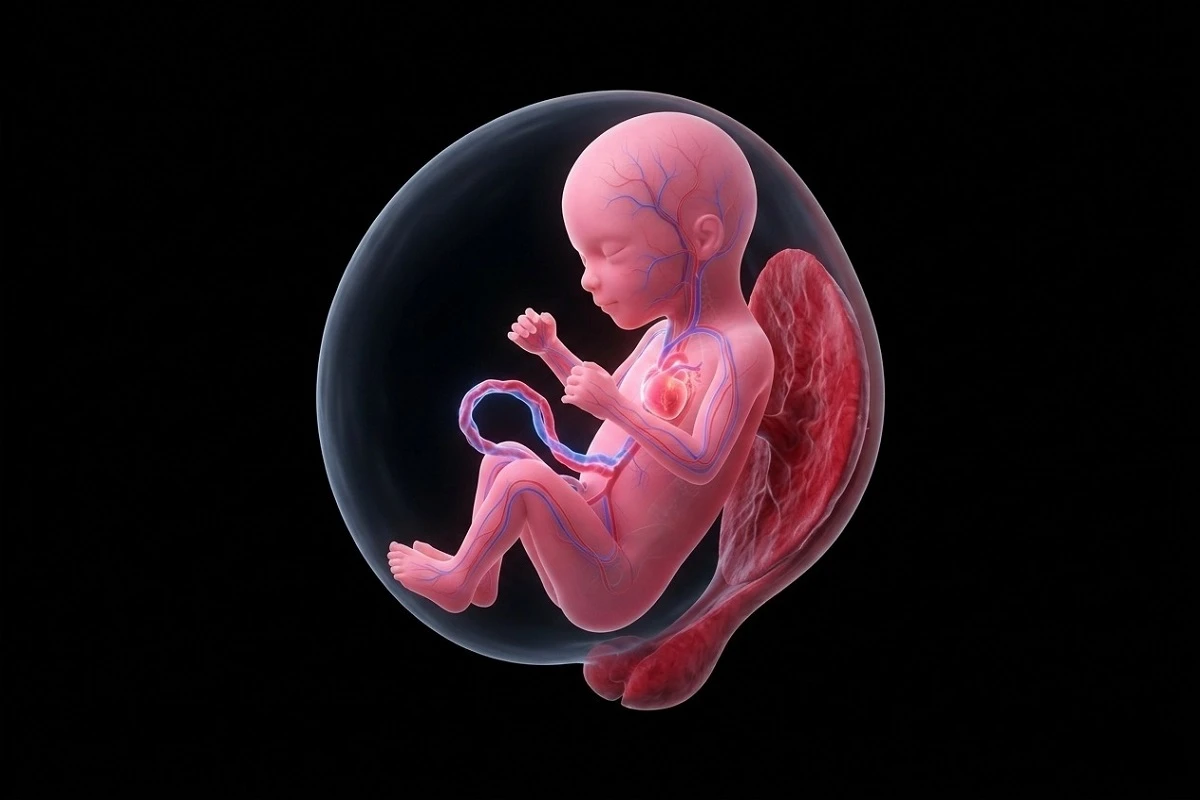
Introduction: A Circulation Built for Life in the Womb
The circulatory system of a developing baby is not a smaller copy of an adult’s. It is a different design, built for a different environment.
Inside the uterus, the lungs are filled with fluid and cannot exchange gas. Instead, the fetus depends entirely on the mother for oxygen, nutrients and waste removal. Every one of those exchanges happens across a single organ: the placenta.
To make this possible, the fetal cardiovascular system uses several short-lived structures that do not exist in a newborn a few hours old. Understanding them is a cornerstone of anatomy, obstetrics, neonatology and paediatric cardiology.
Key idea: Fetal circulation is a bypass system. Most blood skips the lungs and the liver because neither organ is doing its adult job yet.
What Is Fetal Circulation?
Fetal circulation is the movement of blood from the placenta, through the fetus, and back to the placenta again. Along the way it carries oxygen, nutrients and hormones toward the baby and carbon dioxide and metabolic waste away from the baby.
It can also be described as the circulation of oxygenated blood, deoxygenated blood and nutritive material between mother and fetus.
Why It Differs From Adult Circulation In an adult,…

Access all articles, clinical notes, surgical protocols, and medical guides on Library Medicine®. Your ultimate digital archive for healthcare excellence












Comments (0)