
Recurrent Tonsillitis in Children: When Does a Sore Throat Become a Surgical Decision?
Recurrent tonsillitis is one of the most common reasons for an ENT referral in childhood, yet deciding who actually needs surgery is often more nuanced than counting sore throats. This guide walks through a realistic case sequence from diagnosing acute group A strep pharyngitis, to grading tonsil size, to applying the Paradise "7-5-3" criteria and highlights the red-flag complications every pediatrician and parent should recognize.
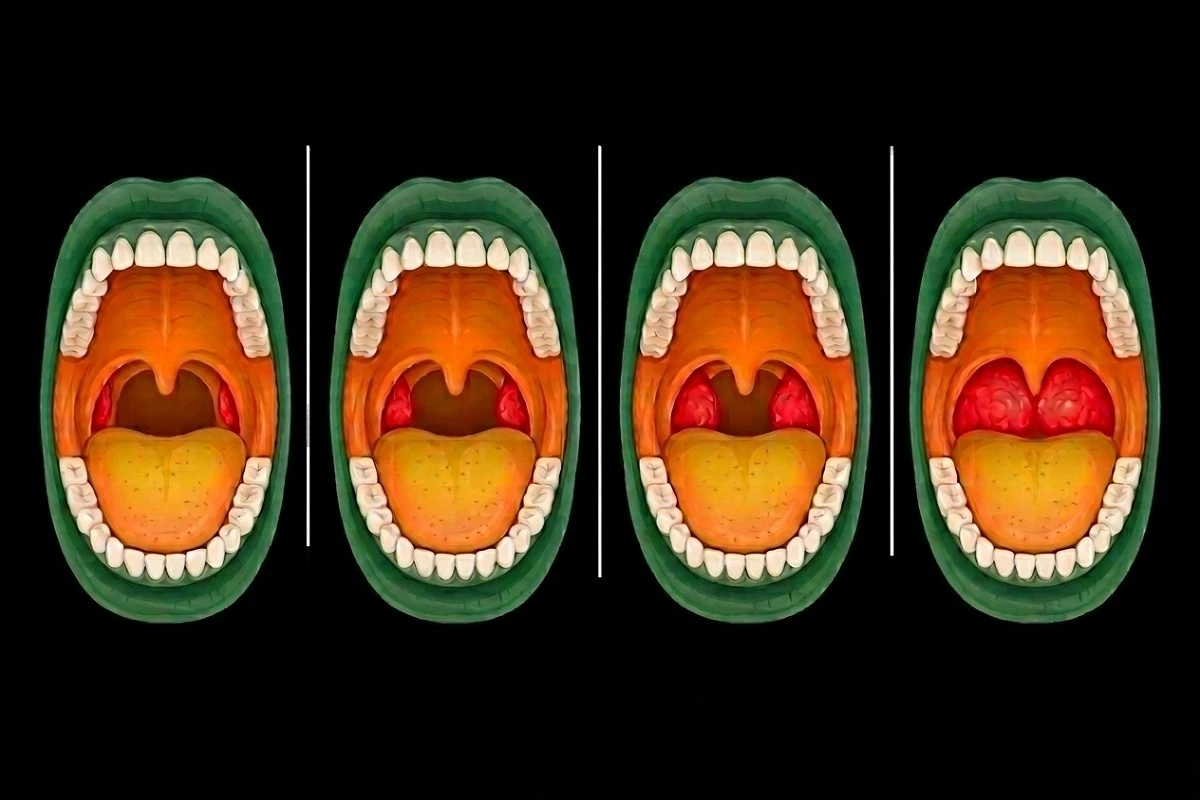
Few complaints are as familiar to a pediatrician as the child who is "always getting throat infections." Most episodes resolve without incident , but a subset of children cycle through fevers , missed school days , and repeated antibiotic courses so often that families start asking the same question: isn't it time to just take the tonsils out? Answering that question well requires more than a episode count , it requires a structured look at the diagnosis , the documentation of each episode , the child's broader health picture , and an honest conversation about the risks of surgery itself.
This review walks through that decision-making process the way it unfolds in clinic: starting with a single sore throat , moving through the criteria that define "recurrent" disease , and ending with the complications that make watchful waiting or urgent surgery the right call.
Recognizing Acute Tonsillitis and Confirming the Diagnosis
CASE VIGNETTE
A 6-year-old boy presents with a 2-day history of severe sore throat , fever of 39.3°C , and difficulty swallowing. On exam , he has tender anterior cervical lymphadenopathy and enlarged , erythematous tonsils with patchy white exudate.
The physical findings here : "enlarged palatine tonsils , erythema and inflammation , and…

Reviewed by the LibraryMedicine.com Clinical Editorial Board. Our authors are practicing physicians and medical educators dedicated to delivering evidence-based, up-to-date clinical guides.















Comments (0)