
Pediatric Burn Management: Current Standards, Challenges, and Clinical Protocols
Pediatric burns require specialized management due to children's unique physiology, including thinner skin, higher body surface area-to-mass ratios, and rapid fluid shifts. Accurate TBSA estimation using the Lund-Browder chart and early transfer to certified pediatric burn centers are essential for optimal outcomes. Fluid resuscitation should be initiated at a lower threshold (10% TBSA) than in adults, with careful titration based on urine output. A multidisciplinary approach encompassing airway management, wound care, pain control, and recognition of non-accidental trauma is critical for improving survival and long-term outcomes.

-
Abstract
Pediatric burns represent a significant source of morbidity and mortality worldwide, with scald injuries predominating in younger children and flame burns affecting older age groups. The unique physiological characteristics of pediatric patients—including higher body surface area-to-mass ratios, thinner skin, and rapid fluid shifts—demand specialized management approaches distinct from adult burn care.
This article provides a comprehensive, evidence-based review of current standards in pediatric burn management, from initial assessment and triage to fluid resuscitation, wound care, and long-term rehabilitation. We emphasize the importance of accurate Total Body Surface Area (TBSA) estimation using the Lund-Browder chart, early consultation with pediatric burn centers, and adherence to American Burn Association (ABA) guidelines.
Special considerations including airway management, compartment syndrome monitoring, and recognition of non-accidental trauma are addressed. A multidisciplinary approach remains essential for optimizing outcomes in this vulnerable population.
-
Introduction & Epidemiology
Burn injuries are among the most common causes of unintentional injury and death in children. In children under five years of age, scald burns from hot liquids—particularly spills from cups, pots, and bathwater—predominate. As children mature, flame burns from residential fires or ignition of flammable substances become more prevalent, reflecting increased independence and risk-taking behaviors.
The pediatric skin presents unique vulnerabilities that make children more susceptible to deep tissue injury. Compared to adults, children have:
-
Thinner skin with reduced dermal thickness, meaning thermal injury penetrates more rapidly and deeply
-
Higher body surface area-to-body weight ratio, resulting in greater evaporative water loss and a propensity for rapid heat loss and hypothermia
-
Immature thermoregulatory mechanisms, increasing the risk of hypothermia during assessment and treatment
These physiological differences underscore why burns of relatively modest TBSA in children can have disproportionate systemic consequences. A critical distinction is that fluid resuscitation is indicated at a lower threshold in pediatric patients—typically burns exceeding 10% TBSA—compared to the 20% threshold used in adults.
-
-
Initial Assessment & Triage
3.1 Primary and Secondary Survey Modifications for Pediatrics
The initial assessment of the burned child follows standard Advanced Trauma Life Support (ATLS) principles with important pediatric-specific modifications. The primary survey—Airway, Breathing,
Circulation, Disability, Exposure—must be completed systematically.
Airway and Breathing:
-
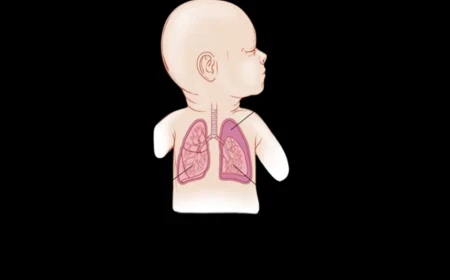
The pediatric airway is narrower and more prone to obstruction from relatively minimal edema. According to Poiseuille's law, a 50% decrease in airway radius results in a 16-fold increase in airway resistance, making prompt airway intervention critical.
-
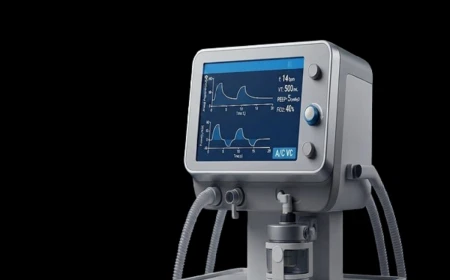
Early intubation should be strongly considered when there are signs of inhalation injury, facial burns, stridor, or respiratory distress.
-
DO NOT delay intubation if severe inhalation injury or respiratory distress is present or anticipated—fluid resuscitation will exacerbate laryngeal swelling and increase intubation difficulty.
-
In pediatric patients, airway compromise is the most common cause of severe morbidity and mortality, likely due to the small size of the airway. The threshold for intubation must be lower in pediatric patients due to the potential for rapid development of airway edema.
-
If the child is not intubated, they must be observed in an area with continuous cardiorespiratory monitoring and staff trained to recognize evolving airway compromise, with intubation facilities immediately available.
-
Consultant anesthetic/PICU staff must be informed of all upper airway burns.
Circulation:
-
Obtain vascular access through unaffected skin. If peripheral access is difficult, intraosseous (IO) access should be obtained promptly.
-
Hypotension is a late and ominous sign in pediatric burn patients; reliance must be placed on subtle signs including tachycardia, prolonged capillary refill time, lethargy, and decreased urine output.
Temperature Management:
-
Maintain patient temperature >35°C. Children are at high risk for hypothermia during exposure and assessment.
3.2 Indications for Intubation in Pediatric Burns
Intubation decisions should be guided by a combination of the American Burn Association (ABA) Criteria and the Denver Criteria, with pediatric-specific modifications.
American Burn Association (ABA) Intubation Criteria:
ABA Criteria Description Signs of airway obstruction Hoarseness, stridor, accessory muscle use, sternal retractions Extent of burn >40% Total Body Surface Area (TBSA) Extensive facial burns Deep dermal or full-thickness depth Dysphagia Difficulty swallowing Intra-oral burns Burns involving the oral cavity Signs of respiratory compromise Respiratory fatigue, hypoxia, poor ventilation Reduced level of consciousness Loss of protective reflexes Anticipated transfer Major burn transfer without qualified personnel to intubate en route Significant risk of edema Risk of airway compromise from progressive edema Denver Criteria (Additions to ABA Criteria):
-
Singed facial or nasal hair
-
Suspected smoke inhalation
The Denver Criteria demonstrated increased sensitivity for predicting the need for long-term intubation (95%) compared to ABA criteria alone (77%).
Pediatric-Specific Intubation Indications:
Clinical signs mandating immediate intubation:
-
Stridor, drooling, or hoarseness
-
Facial or neck burns with evidence of airway involvement
-
Increased work of breathing (accessory muscle use, sub- and suprasternal retractions)
-
Decreased level of consciousness with loss of protective reflexes
-
Oxygen saturation <94% in room air (note: normal saturations do NOT exclude inhalation injury as carboxyhemoglobin is misread as oxyhemoglobin by pulse oximeters)
-
Carbonaceous sputum, soot in mouth/nares, or oral mucosal edema/ulceration
High-Risk Clinical Scenarios (Strongly Consider Early Intubation):
-
Enclosed space fire exposure with suspected inhalation injury
-
Death of persons at the scene (indicates high toxin exposure)
-
Signs of upper airway edema—tongue swelling, facial edema, neck swelling
-
Deep dermal and full-thickness facial burns
-
Carboxyhemoglobin >5% on co-oximetry
-
Intraoral burns or singed nasal hairs
Special Pediatric Considerations:
-
"IF IN DOUBT, INTUBATE" —the pediatric airway becomes obstructed more rapidly than the adult airway
-
Intubate prior to transfer if the child requires transport between hospitals and airway concerns exist
-
Edema progresses rapidly and is worsened by fluid resuscitation—do NOT wait for deterioration
-
Signs may be minimal at presentation but progress rapidly—continuous monitoring essential
Intubation Technique Recommendations:
Recommendation Rationale Senior staff experienced in difficult pediatric airways should perform intubation Edema increases intubation difficulty Video-laryngoscopy improves first-pass success, especially in children <1 year Superior glottic visualization Nasal intubation is preferred More stable; but do not convert a successful oral intubation Use largest cuffed tube that is age-appropriate (microcuff preferred) Prevents air leak; cuff typically remains deflated DO NOT cut the endotracheal tube Evolving edema can make a cut tube too short Secure tube so it can be advanced in the first few days Accommodates progressive edema Suxamethonium can be used to facilitate intubation in the first 24 hours post-burn; contraindicated after 24 hours Risk of hyperkalemia after 24 hours from cutaneous burn Elevate head of bed to 30-45° Promotes gravity drainage of edema Hydroxocobalamin for suspected cyanide toxicity Determine by burn attending 3.3 Estimating Total Body Surface Area (TBSA)
Accurate TBSA estimation is critical for appropriate fluid resuscitation and triage decisions. The Lund-Browder chart is the preferred method for pediatric patients because it accounts for age-related changes in body proportions. Unlike the Rule of Nines, which is appropriate for adults, the Lund-Browder chart adjusts for the larger head and smaller lower extremities in children.
Key points for TBSA estimation:
-
Only partial- and full-thickness burns are counted; superficial (first-degree) burns are excluded from TBSA calculations
-
The palmar method—using the patient's palm (including fingers) from the wrist crease to fingertip—represents approximately 1% TBSA and is useful for smaller burns
-
TBSA estimation should ideally be performed after initial debridement
Modified Lund-Browder Chart Values (%TBSA per body part) :
Area 0-1yr 1-4yrs 5-9yrs 10-14yrs 15+ yrs Head 9.5 8.5 6.5 5.5 4.5 Neck 1 1 1 1 1 Anterior Trunk 13 13 13 13 13 Posterior Trunk 13 13 13 13 13 Upper Arm (each) 2 2 2 2 2 Forearm (each) 1.5 1.5 1.5 1.5 1.5 Hand (each) 1.25 1.25 1.25 1.25 1.25 Thigh (each) 2.75 3.25 4 4.25 4.5 Leg (each) 2.5 2.5 2.5 3 3.25 Foot (each) 1.75 1.75 1.75 1.75 1.75
3.4 Criteria for Transfer to a Certified Pediatric Burn Center
The American Burn Association (ABA) provides clear criteria for transfer to a specialized burn center. Transfer is recommended for:
-
Partial-thickness burns >10% TBSA in children
-
Full-thickness burns of any size
-
Burns involving the face, hands, feet, genitalia, perineum, or major joints
-
Electrical burns or lightning strikes
-
Chemical burns
-
Inhalation injury
-
Burns with concomitant trauma where the burn poses the greatest mortality risk
-
Children in hospitals without qualified personnel or equipment for pediatric burn care
-
Suspected non-accidental trauma or patients requiring specialized social/rehabilitative intervention
-

Reviewed by the LibraryMedicine.com Clinical Editorial Board. Our authors are practicing physicians and medical educators dedicated to delivering evidence-based, up-to-date clinical guides.










Comments (0)